

Lindos Acropolis history spans an ancient sanctuary to fortifications shaped during the era of the Knights. Set above Lindos on Rhodes, the site preserves buildings and defenses from several periods, including the Temple of Athena Lindia and medieval walls.
- Setting: above the traditional settlement of Lindos, Rhodes
- Key ancient remains: the Temple of Athena Lindia, Propylaea, staircase and Hellenistic Stoa
- Seasonal opening hours, tickets and admission rules are published by Hellenic Heritage
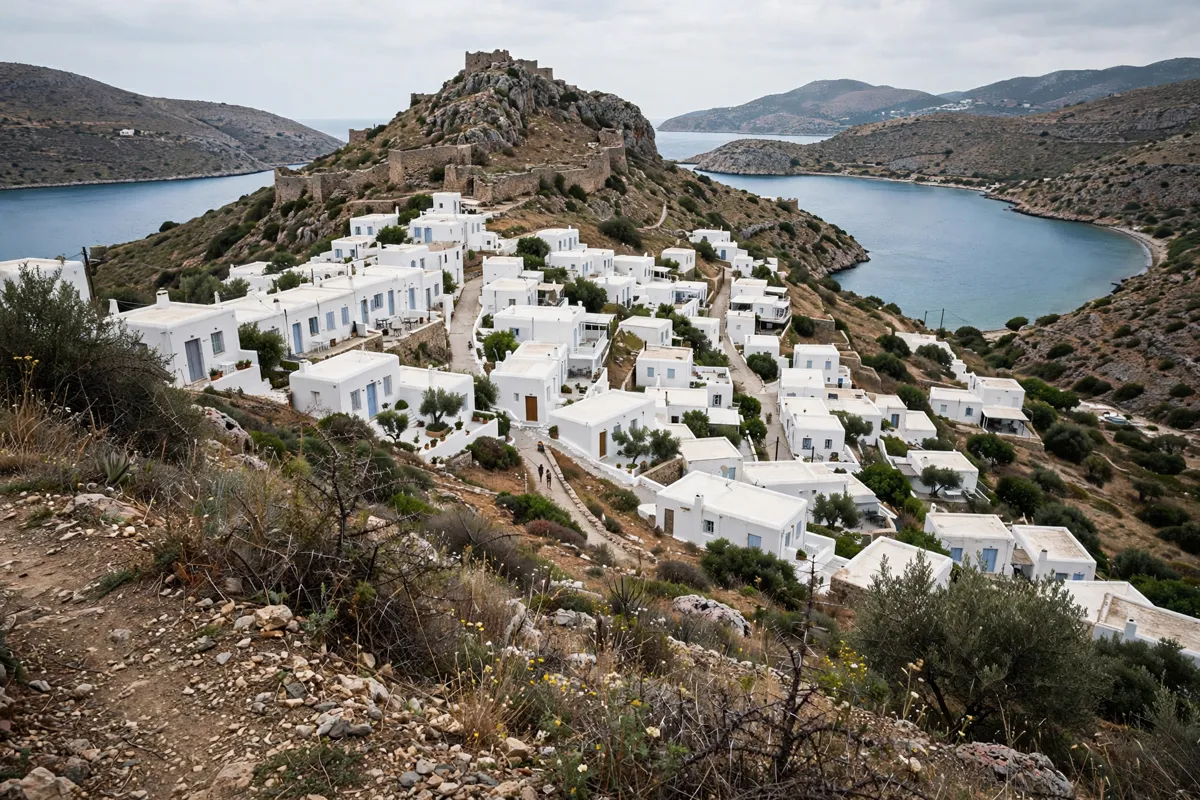
Lindos and Its Ancient Setting
Ancient Lindos developed on the site of today’s settlement, and evidence points to people living in the area as early as the Neolithic period. Its elevated acropolis later became a focal point for religious and civic life.
Lindos belonged to the Dorian Hexapolis and reached its peak during the Archaic period, in the 7th and 6th centuries BC. Under Cleobulus, a ruler of the 6th century BC, the city became a major commercial and naval power. Its importance gradually declined after Rhodes was founded in 407 BC.
The Acropolis stands a 10-minute walk from Lindos’s traditional settlement. A cobbled path through the village forms part of the route uphill, so you can pass through the settlement on your way to the site.
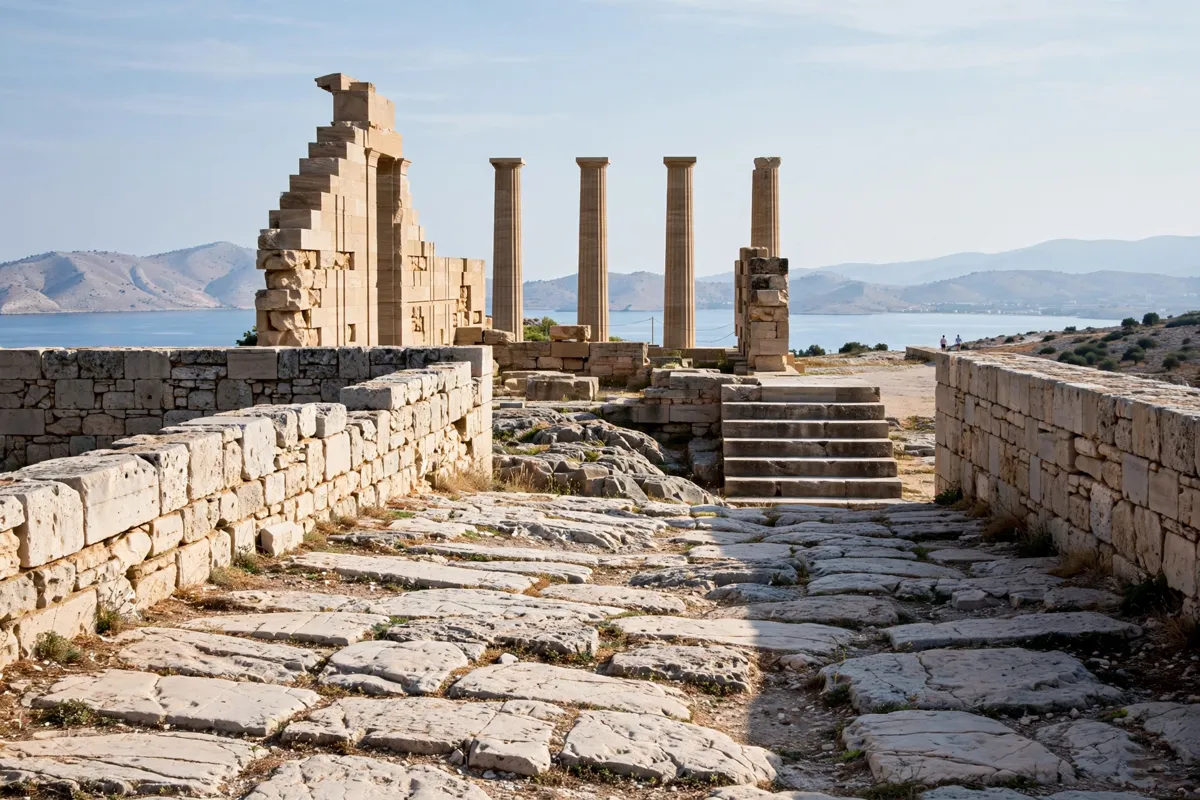
The Sanctuary of Athena Lindia
The cult of Athena on the acropolis probably began in the 9th century BC. Historical sources cited by Hellenic Heritage say Cleobulus restored the Sanctuary of Athena Lindia in the 6th century BC; it became renowned in the Classical and Hellenistic periods.
The Doric Temple of Athena Lindia was built in the 4th century BC. Its tetrastyle, amphiprostyle design means it had four columns across the front and a projecting portico at each end; part of the temple survives.
The sanctuary’s entrance buildings were also substantial. The Propylaea and a monumental staircase date to the 4th century BC, marking the approach to the sacred area. A Hellenistic Stoa, built somewhat later, measured 87 metres long and had 42 columns.
As you look over the surviving structures and their layout, what to see at Lindos Acropolis puts the main remains in context.
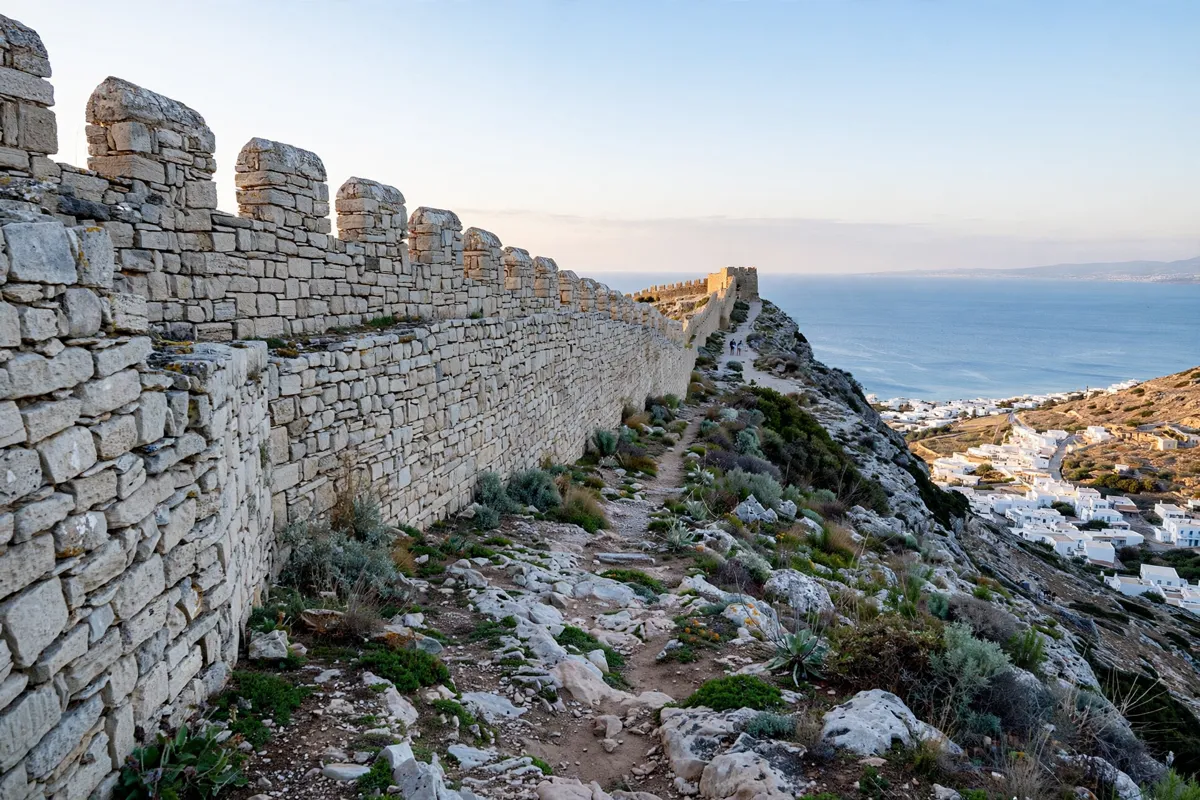
Later Building and Fortification
The acropolis continued to change after its ancient religious role. During the era of the Knights, the Hospitallers expanded earlier Byzantine defenses and strengthened the walls, shaping the fortifications’ present appearance.
The Knights also built the Commandery, identified as the residence of Lindos’s governor. The Byzantine church on the acropolis was dedicated to Saint John, patron of the Knights’ Order. Visit Greece identifies the church of Agios Ioannis as dating to the 13th century and places it among remains from the Byzantine era and the time of the Knights.
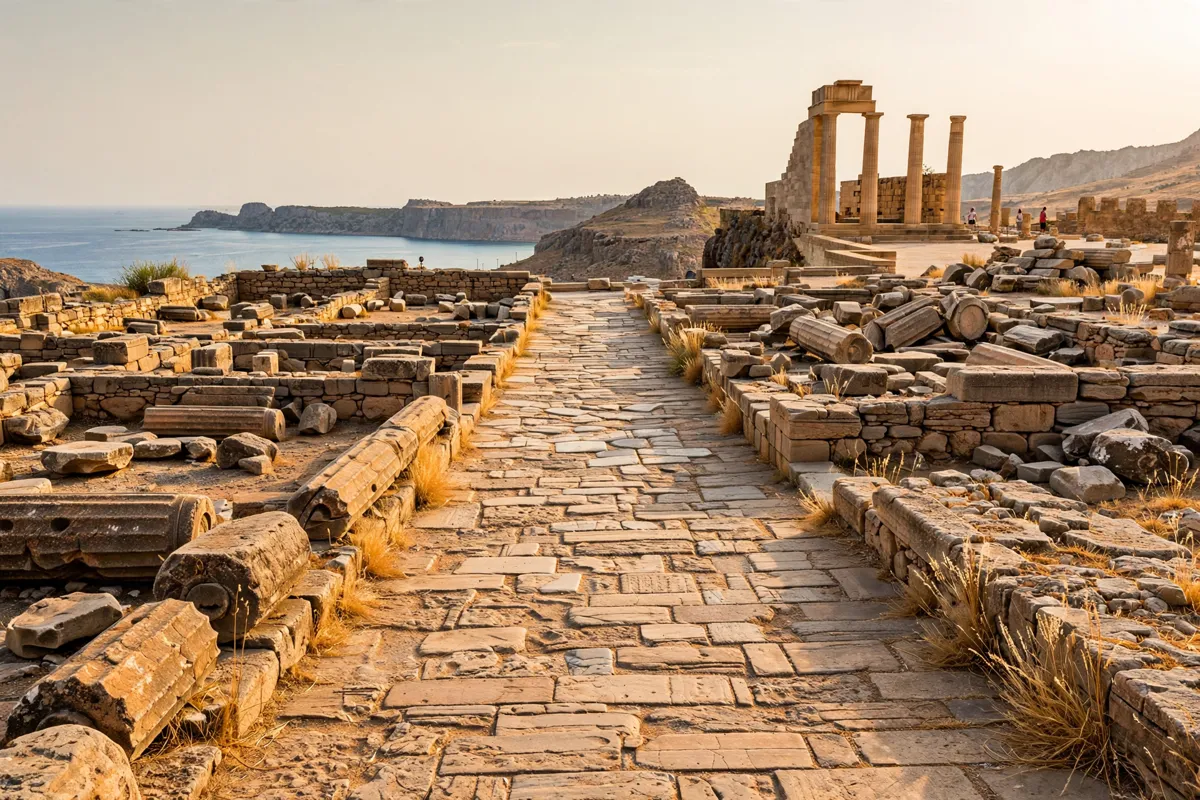
Reading the Remains at the Site
At the acropolis, look for evidence of different building phases rather than a single, unchanged complex. The temple and sanctuary approach belong to the ancient site; the Stoa reflects a later Hellenistic phase, while the defenses and Commandery show how the acropolis was adapted during the era of the Knights.
The ancient stadium and a small open-air theatre lie slightly below the acropolis. As you walk around the summit, their position adds another layer to the site’s setting beyond the hilltop buildings themselves.
What Visitors Can Still See
Surviving remains include part of the Temple of Athena Lindia, along with the sanctuary’s Propylaea and monumental staircase, the Hellenistic Stoa, fortification walls, the Commandery and the church of Agios Ioannis. Together, they show how the hilltop served different purposes across the ancient, Byzantine and Knights’ periods.
Hellenic Heritage gives a full ticket price of €20 and a reduced price of €10. Free admission applies on March 6, April 18, May 18, the last weekend of September, October 28, and the first and third Sundays of each month from November 1 through March 31.
Ticket terms can change, so you can check what to check about Lindos Acropolis tickets as you plan your visit.
The seasonal schedule runs from April 1 through March 31, with closing times becoming earlier through September and October. The site closes on January 1, March 25, May 1, Easter Sunday, and December 25 and 26.
Last admission is 20 minutes before closing. Check the official site before you go, and check the opening schedule before choosing your arrival time.
Opening hours
- Monday to Sunday: 8:00–18:10
Last checked November 2026. Hours can change on holidays and for special events.
The site address is 85107, Lindos, and facilities include a café/restaurant, shop, WC and parking. Lindos Acropolis is about an 11-minute walk from Lindos Harmony Suites, or about five minutes by car; you can follow the cobbled village path on foot.
FAQs
How old is the cult of Athena at Lindos?
The cult on the acropolis probably began in the 9th century BC. The sanctuary became renowned during the Classical and Hellenistic periods.
Who built the fortifications at Lindos Acropolis?
During the Knights’ era, the Hospitallers strengthened the walls by expanding earlier Byzantine defenses. Their work shaped the fortifications’ present appearance.
What remains from the Byzantine and Knights’ periods?
Remains include the church of Agios Ioannis, which dates to the 13th century, as well as fortifications and the Commandery from the era of the Knights.
How do you reach Lindos Acropolis from the village?
The walk from Lindos’s traditional settlement takes 10 minutes. The route follows a cobbled path through the village.